
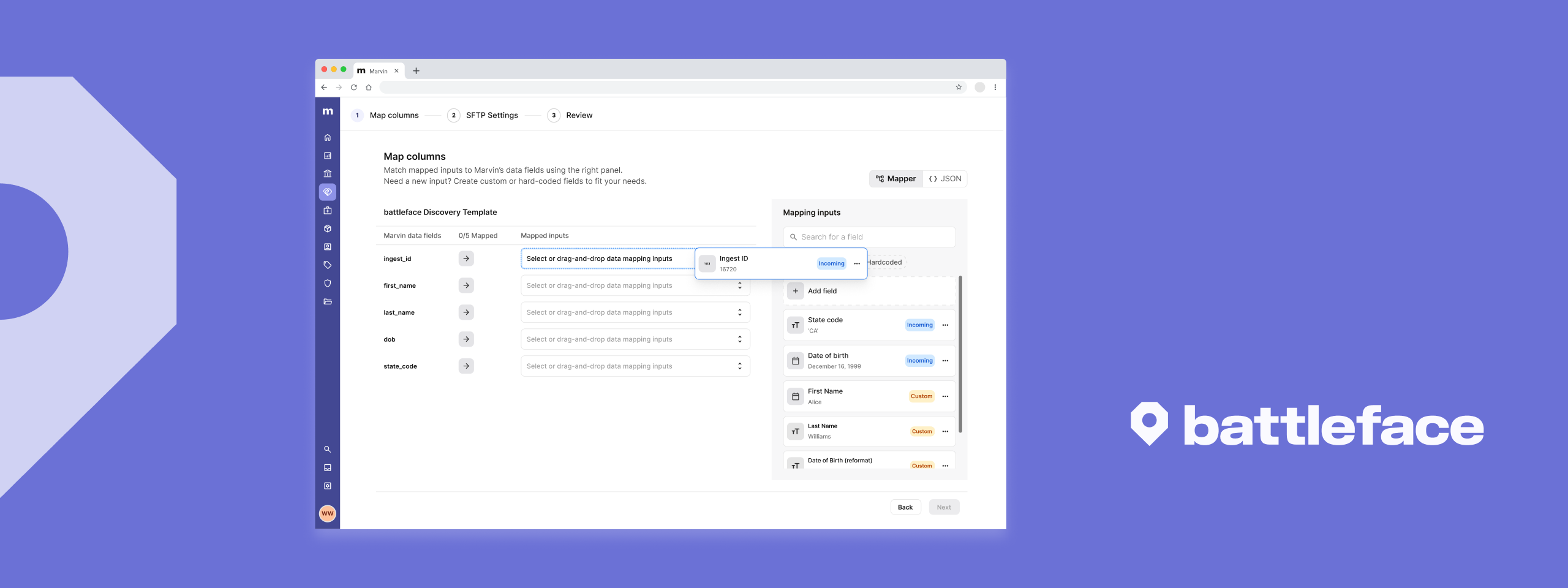
battleface is an insurance startup that grows revenue through partnerships with other insurers. In these partnerships, other companies sell our products under their own brand name — and in return, they send us monthly sales reports and pay a commission based on those sales.
Earlier this year, our executive team raised a concern: six potential partners had backed out before signing agreements — a major issue since partnerships are one of battleface’s largest revenue streams.
Design: Tyler M, Ethan W
Product Manager: Jay C
Research, Prototyping, Product Strategy, Usability Testing, Design Systems, 0-1 Design
To understand why potential partners walked away, we interviewed key stakeholders — including partner representatives and the service and software engineers who manage partner integrations within battleface’s ecosystem. We discovered from these conversations that:
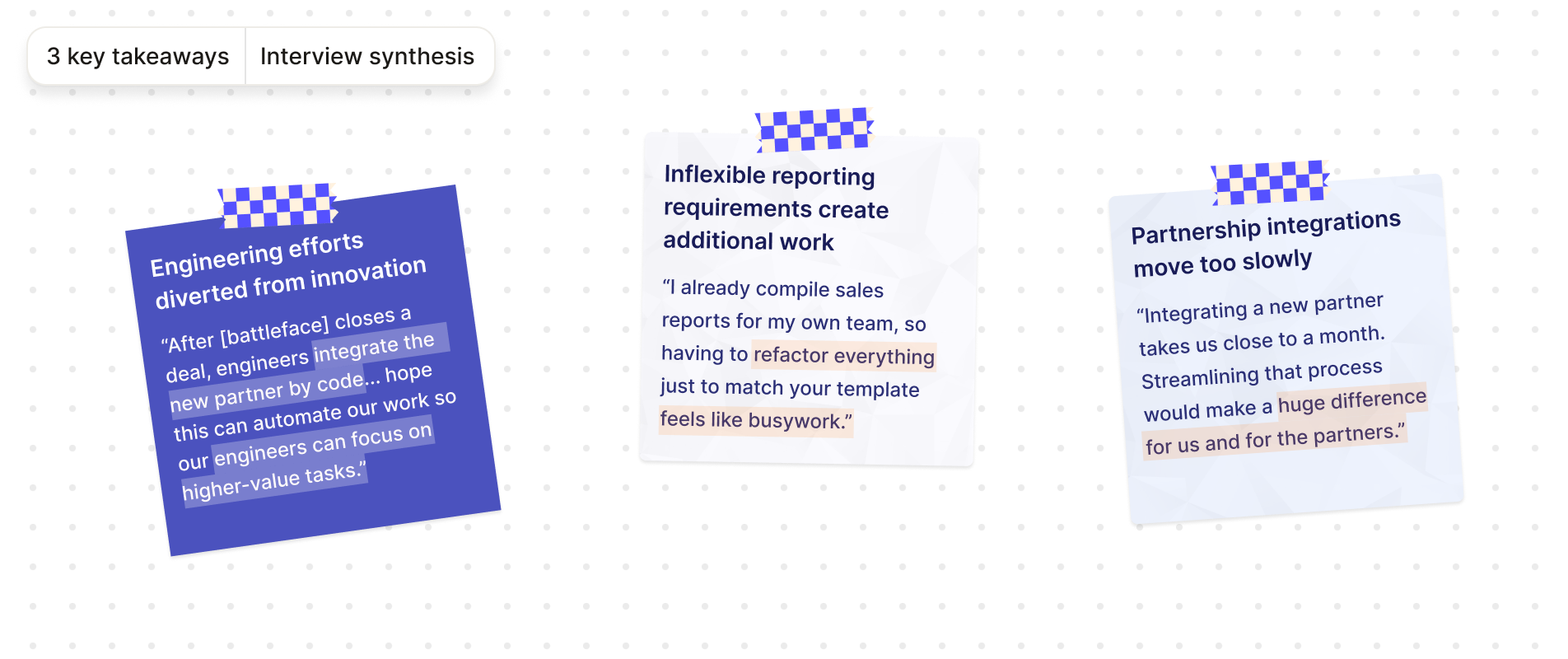
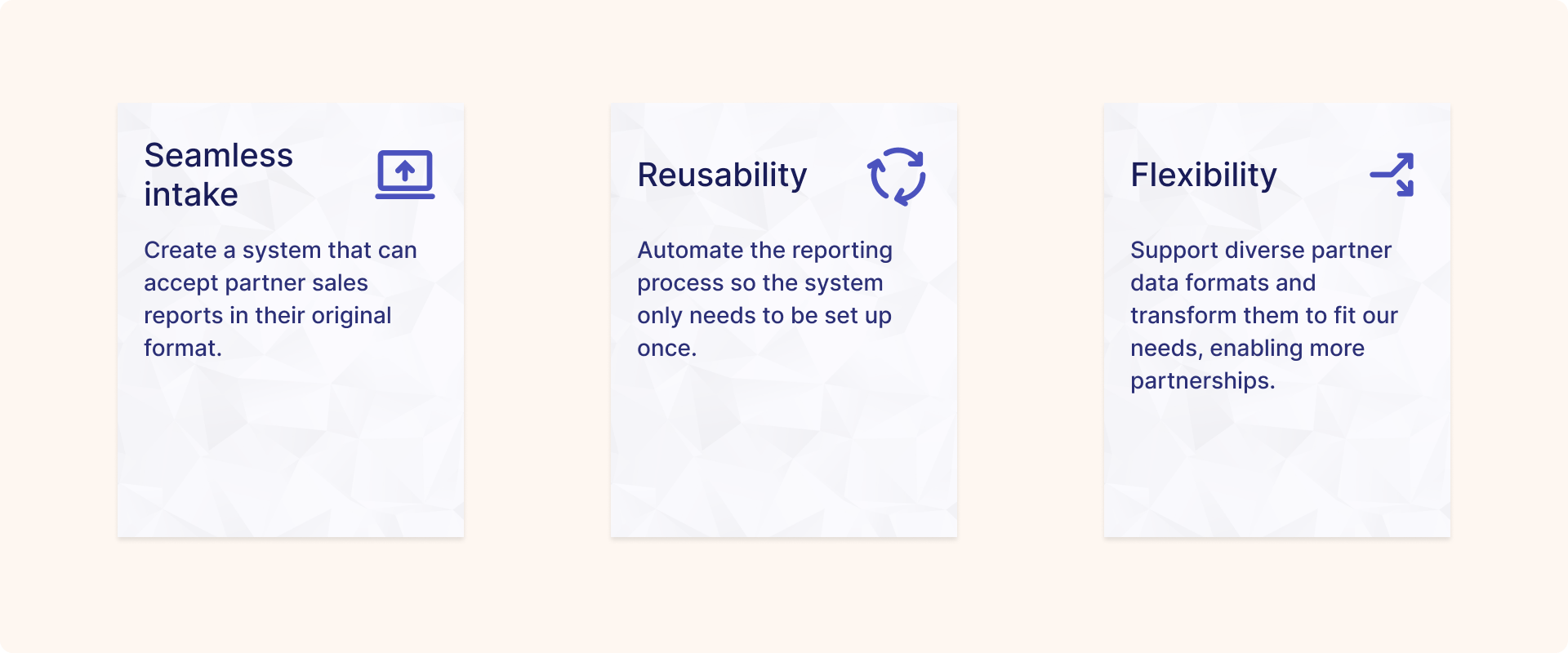
Guided by our interview findings, I identified three opportunity areas that our design solution should address. I also met with my PMs to confirm business goals — the most important being to win back the six partnerships that had fallen through earlier in the year.
I also researched how other companies solved similar problems before exploring solutions.
✅ Strengths:
🚫 Weaknesses:

Our early explorations and research led us to a data field mapping concept within battleface’s internal tool, Marvin. While similar patterns exist on other platforms, our designs needed to handle the complexities of insurance data.
We began with low-fidelity sketches to visualize a mapper that connects column headers from a partner’s sample sales file to the corresponding data fields in battleface’s system. This concept became the backbone of our integration workflow. The mapper enables:
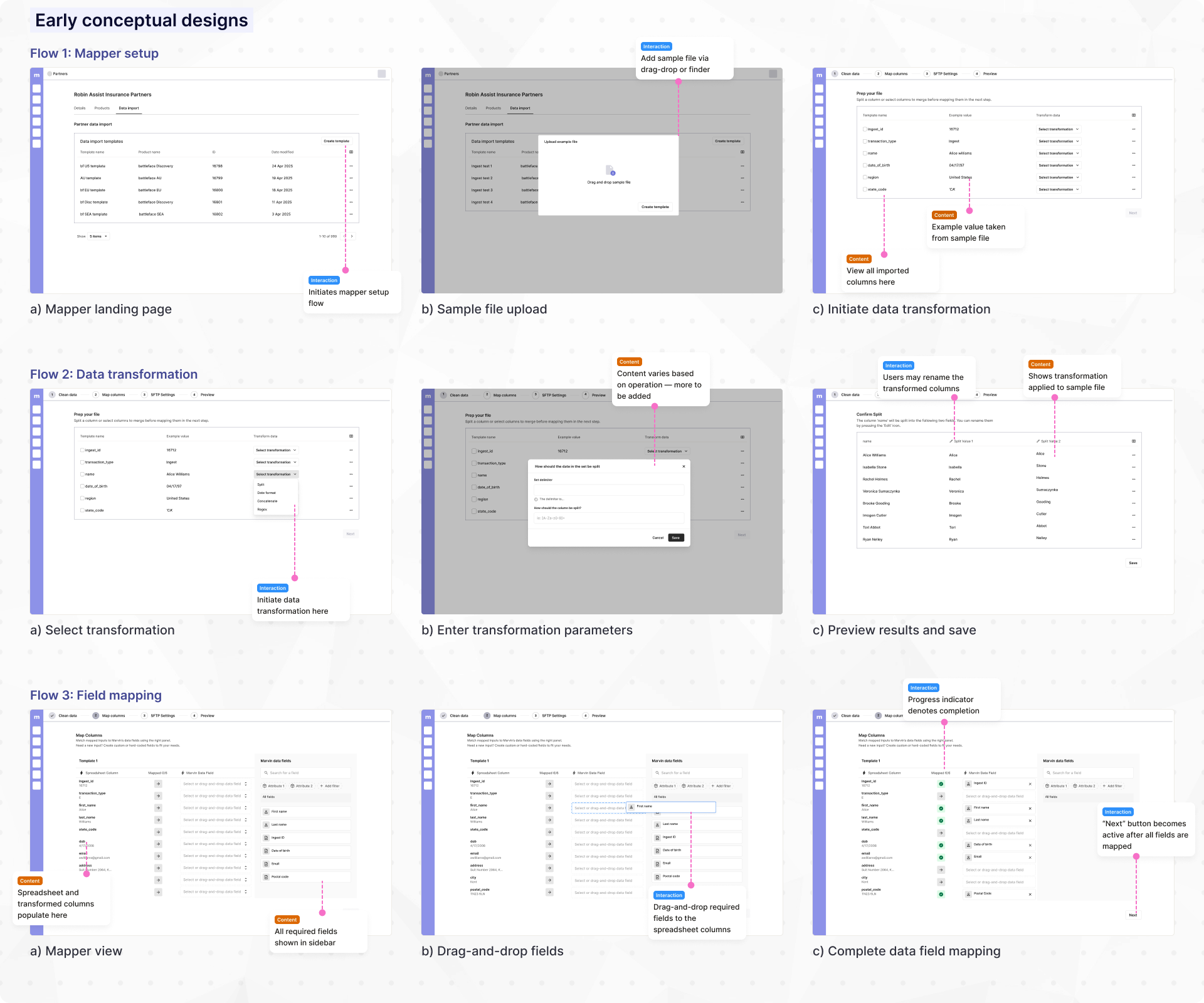
Seeing test participants grasp the concept so quickly was exciting. For the first time, we could picture a scalable way to process partner sales data — but we still had work to do to iron out the details.
Once the concept was clear, our next challenge was to design a mapping interaction that felt intuitive and didn’t overwhelm users with data.
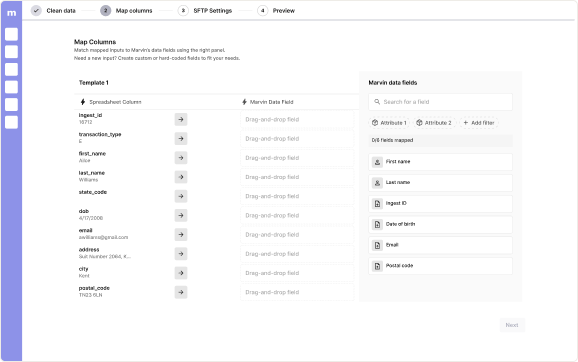
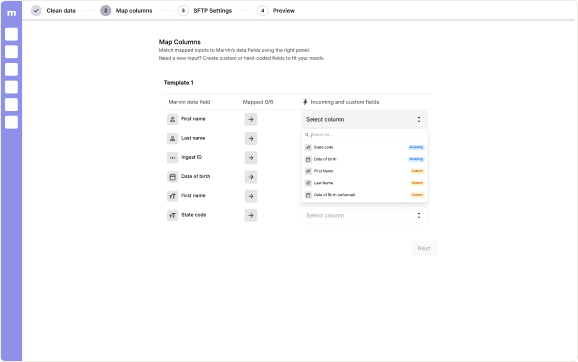
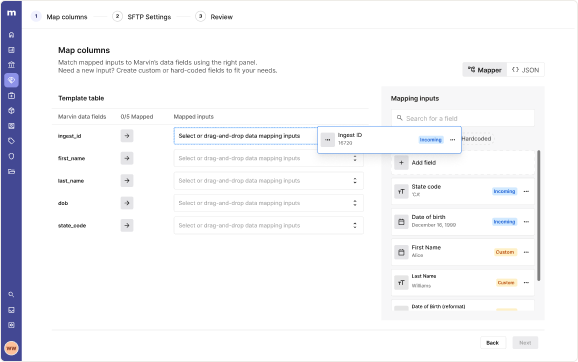
✅ Intuitive mental model
⛔ Scales poorly with product reqs.
⛔ Subpar information architecture
⛔ No custom field management
✅ Scales well with products reqs
✅ Clearly indicates required fields
⛔ Mappable fields not visible
⛔ No custom field management
✅ Fast and intuitive mapping
✅ Allows custom field management
✅ Allows import/export of progress
✅ Performed the best in user testing
During early validation testing, test participants voiced how it was frustrating that custom field creation and mapping were done in separate steps because it would require lots of back and forth. In response to the feedback, we:

The integrated custom field concept had the added benefit of being less costly (from an engineering standpoint) than the first iteration. Early and frequent conversations with engineers were critical to ensuring our designs remained feasible.
After months of iteration and testing, battleface launched the Data Import feature, which maps a partner’s sample sales report to our internal fields and creates a reusable setup. From then on, partners can send sales files as-is, significantly reducing additional work and facilitating onboarding for new partnerships.The new workflow addressed every major pain point uncovered during research:
Above is a quick overview of the data import feature. Click here for a more detailed walkthrough.
The impact of the data import feature was immediate – within the first 3 months after launch, the mapper was able to achieve the following:
in partnership revenue generated
33% above target
Improvement in partner onboarding time
The importance of solving the right problem
Looking back, the hardest part of the project wasn’t designing the interface — it was advocating for the user when technical tradeoffs were on the line. A couple of years ago, I might have backed down. But this time, I stood my ground and fought for what users needed, even when it meant extra work.
The importance of early testing
Part of the reason why this initiative went so smoothly was because our team tested the mapper concept early and frequently. Early and frequent testing allowed us to validate the design direction and build a feature that solved both battleface’s and partners’ needs.